
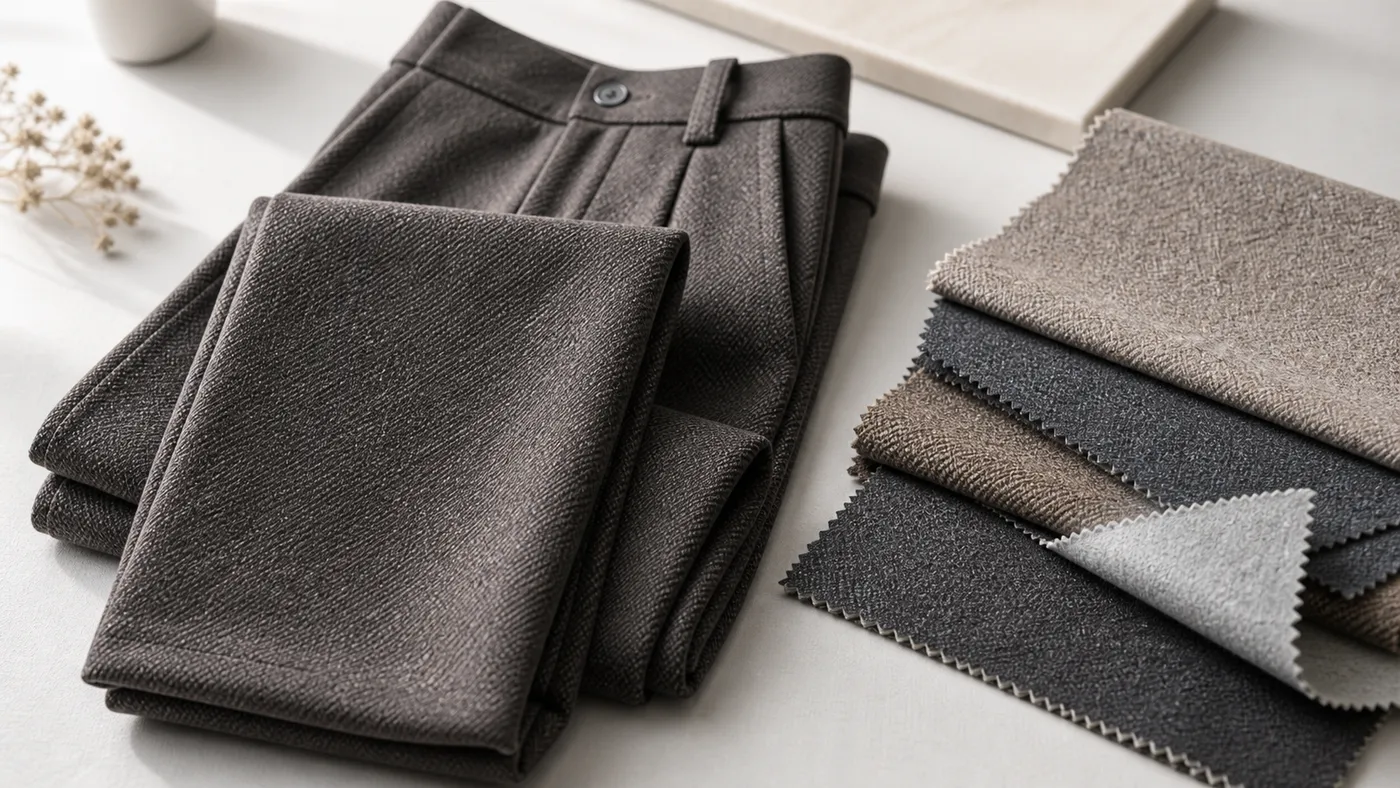
For autumn and winter trouser collections, fabric buyers often need more than a warm-looking surface. A good women’s trouser fabric must hold shape, feel comfortable when worn, move cleanly with the garment pattern and keep a stable appearance after sample review. This is why many buyers compare wool-feel bonded fabric with ordinary woven fabric, brushed fabric or lighter suiting fabric before confirming bulk development.
Wool-feel bonded fabric is especially useful when a trouser style needs a structured silhouette with a soft inner touch. Huajay’s current listed range focuses on 460-520 GSM wool-feel bonded fabrics with wool-like surface textures, melange yarn effects, twill structures, jacquard patterns and jersey or fleece backing options. For buyers developing wide-leg trousers, straight pants, tailored winter pants or A-line skirt bottoms, the key question is not only “Is the fabric thick enough?” but “Does the structure match the garment?”
This guide explains how to shortlist wool-feel bonded fabric for autumn/winter women’s trousers before requesting samples.
Start With the Target Trouser Shape
The first selection point is the garment silhouette. Different trouser shapes need different fabric behavior.
For wide-leg trousers, buyers usually need enough body so the leg line does not collapse. Melange twill fabrics and brushed heavyweight fabrics can be useful because they combine surface depth with a stable fall. A fabric that is too soft may look comfortable on a swatch but lose the intended shape after sewing.
For straight trousers or cigarette pants, the fabric should look clean and controlled. Fine diagonal twill, subtle melange textures or compact wool-feel surfaces are often easier to use than large-scale patterns. If the trouser pattern has a narrow leg or pressed line, ask whether the fabric can keep a neat edge and whether the backing affects seam thickness.
For skirt-pants, A-line skirts or structured bottoms, jacquard and textured fabrics may add visual value. In this case, buyers should check whether the pattern scale works after cutting. A bold jacquard may look attractive as a fabric panel but feel too strong on a smaller garment piece.
Huajay’s application page for autumn/winter women’s trouser fabric can be used as the first internal reference when shortlisting styles.
Check GSM, But Do Not Choose by Weight Alone
GSM is important, but it is not the whole decision. Huajay’s main wool-feel bonded fabric range is around 460-520 GSM, which places it in a heavyweight range suitable for structured autumn/winter garments. For trousers, this weight range can help create warmth, body and a more substantial handfeel.
However, two fabrics with similar GSM can behave differently. The surface weave, yarn type, brushing level and backing fabric all affect drape. A 480 GSM fabric with a compact twill surface may feel sharper and more tailored. A 500 GSM brushed or boucle-effect fabric may feel softer and more textured. A jacquard fabric may have more visual structure but require careful cutting and sample review.
When comparing styles, ask for the full specification instead of relying only on weight:
- Composition
- GSM range
- Width
- Backing type
- Surface texture
- Color availability
- Recommended application
- Current stock and lead time
For buyers who are still defining the product line, the core wool-feel bonded fabric page is a better starting point than a single style page.
Compare Jersey Backing and Fleece Backing
Backing is one of the most important choices for bonded trouser fabric. Jersey backing and fleece backing can both support wool-feel bonded structures, but they create different wearing and sewing effects.
Jersey backing is usually the cleaner option when buyers want a smoother inner side and a more controlled trouser shape. It can be suitable for tailored trousers, structured wide-leg pants and styles where the inside should not feel too bulky.
Fleece backing can add a warmer and softer inner feel. It may be useful for winter casual pants, heavier bottoms or styles where warmth and comfort are more important than a sharp tailored line. The tradeoff is that fleece backing may increase thickness at seams, waistbands, pocket areas and hems.
Before choosing backing, review the garment construction. A simple wide-leg trouser may handle a warmer backing well. A more tailored pant with pocket bags, pleats, waistband layers and precise seams may need careful sampling to avoid bulk.
The resource page Jersey Backing vs Fleece Backing can support this discussion before sample selection.
Match Surface Pattern to the Buyer Segment
Women’s trouser fabrics can be quiet, classic or expressive. The best choice depends on the buyer’s market position and garment design.
Melange and twill wool-feel fabrics are practical for everyday trousers because they provide depth without becoming too seasonal. They can work for office pants, wide-leg trousers and coordinated jacket-trouser looks. Buyers can review the melange and twill fabric series when they need structured but versatile options.
Jacquard fabrics are stronger visual choices. Dot jacquard, wave jacquard or subtle animal-inspired jacquard can help a trouser style feel more distinctive, especially for boutique collections or statement winter pieces. These styles should be checked at garment scale because the pattern repeat, shine and pile variation may look different after cutting. See jacquard wool-feel bonded fabric for related style direction.
For conservative collections, avoid overloading the trouser with large motifs. For fashion-led collections, use sample garments or larger cutting panels to confirm how the pattern appears on the leg.
Review Handfeel, Drape and Sewing Bulk With Real Samples
A small fabric image cannot answer every trouser development question. Buyers should use samples to check handfeel, drape, inner touch and sewing thickness before bulk planning.
During sample review, check:
- Whether the fabric recovers cleanly after folding
- Whether the trouser line feels too stiff or too soft
- Whether the backing feels comfortable against the body
- Whether the surface pile or texture changes direction
- Whether seams become too thick at waistband and hem areas
- Whether the color looks stable under showroom and daylight conditions
If the final garment is a wide-leg pant, hang a larger sample panel vertically to see how it falls. If the garment is a tailored trouser, fold the fabric at likely seam positions and waistband layers. If the style uses pleats, ask the sampling room to check whether the fabric can hold the intended fold without excessive bulk.
Ask Testing Questions Before Bulk Order
For autumn/winter trouser fabric, buyers may need to confirm color fastness, shrinkage, pilling tendency and composition accuracy before bulk order. The exact test items depend on the buyer’s market, garment use and brand requirement.
Huajay’s current public wording should stay careful: testing requirements can be discussed before bulk planning, but the website should not claim certification or published third-party test reports unless documents are available. This protects both the buyer and the supplier from unclear expectations.
Before placing a larger order, send the target test requirements together with the style number and intended garment. The fabric testing support page can be used as the internal link for this step.
What to Send When Requesting Samples
A clear inquiry helps Huajay recommend suitable styles faster. For women’s trousers, include:
- Target garment: wide-leg trouser, straight pant, skirt, casual winter pant or tailored bottom
- Preferred surface: melange, twill, jacquard, brushed, boucle-effect or plain wool-feel
- Target GSM or desired handfeel
- Backing preference: jersey or fleece, if already known
- Color direction
- Trial quantity or expected development size
- Testing requirements, if any
- Timeline for sample review or bulk planning
If you already have a reference garment, send photos and explain what should be matched: weight, warmth, surface look, drape, thickness or price position. If you do not have a reference, start from the application page and ask for 2-4 suitable styles instead of requesting every available option.
Conclusion
Choosing wool-feel bonded fabric for autumn/winter women’s trousers is a structure decision, not only a color or weight decision. Buyers should compare GSM, surface pattern, backing type, sewing bulk, drape and testing needs before confirming bulk order.
Huajay can help shortlist wool-feel bonded fabrics for women’s trousers, wide-leg pants and structured winter bottoms based on target garment, color direction and sample needs. To start, review the women’s trouser fabric page or submit details through the sample request form.