
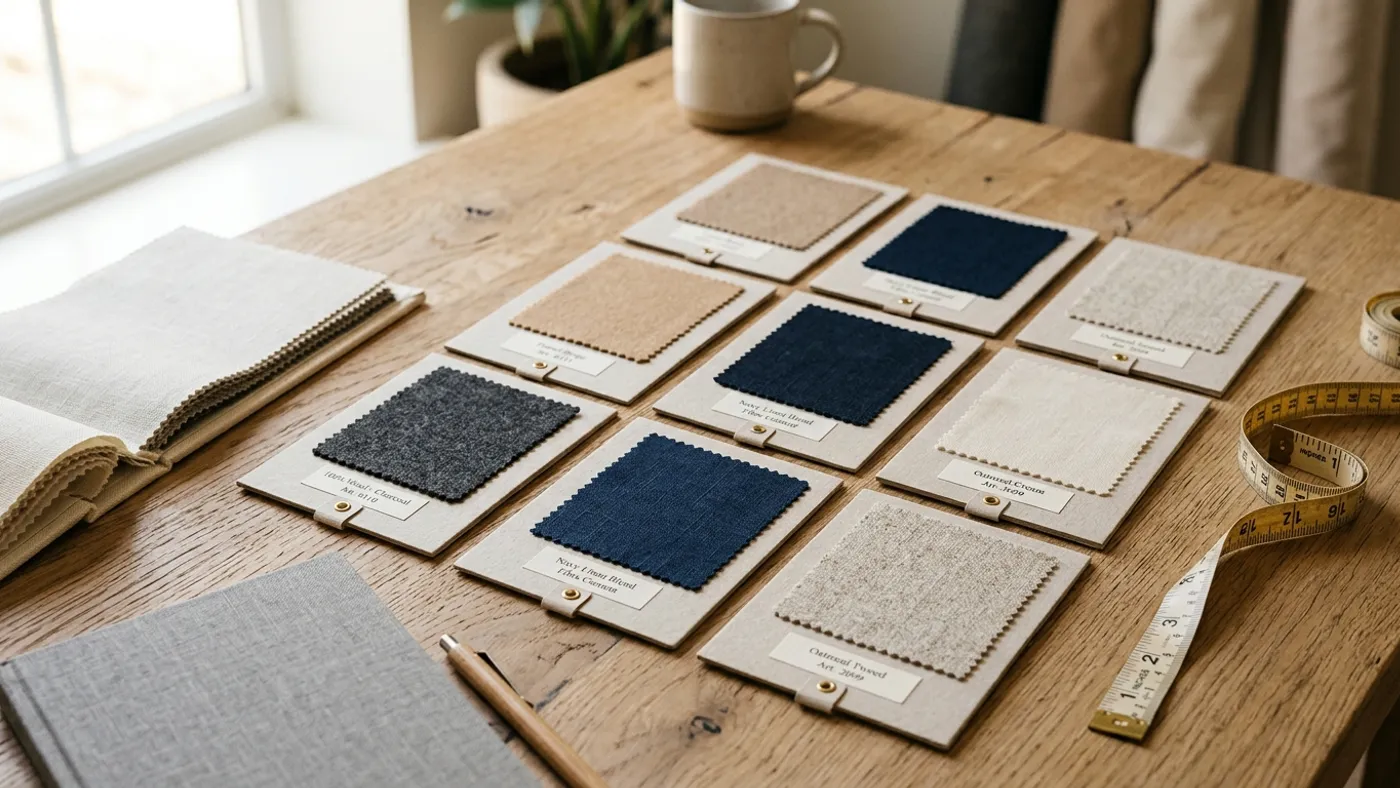
Requesting fabric samples is the first real step in evaluating a new supplier. A well-prepared sample request can save weeks of back-and-forth communication and help you receive swatches that are genuinely useful for your garment development. A vague request often results in irrelevant samples, delayed responses and a longer path to bulk order.
This guide covers what to include in a sample request, how to communicate with a China-based fabric supplier, what to evaluate when samples arrive and common mistakes that slow down the sourcing process.
Why a Clear Sample Request Matters
Fabric suppliers typically manage dozens of inquiries each week. A sample request that includes garment context, target weight, backing preference and colour direction allows the supplier to recommend suitable styles quickly. A request that says only “send me your catalogue” or “send samples of your wool fabric” requires follow-up questions before the supplier can act.
For B2B buyers working with China-based suppliers, a detailed initial request is especially valuable because:
- It reduces the number of clarification rounds before samples are dispatched
- It helps the supplier shortlist styles that match your actual garment rather than sending a generic range
- It signals that you are a serious buyer who understands fabric specifications
- It allows the supplier to include relevant technical information alongside the physical samples
What to Include in Your Sample Request
A complete sample request for wool-feel bonded fabric or similar winter outerwear fabric should cover the following points.
1. Target Garment Type
Specify what the fabric will become. Different garment types need different weight, drape and structure. “Structured women’s overcoat” communicates a different set of requirements than “soft-shoulder blazer” or “wide-leg winter trousers”.
If you have a reference garment — an existing coat or jacket that represents the weight, handfeel or silhouette you are targeting — mention it. A photo of the reference garment alongside your request helps the supplier visualise the end product.
2. Fabric Weight (GSM)
Indicating a target GSM range narrows the shortlist significantly. If you are unsure of the ideal weight, describe the garment’s warmth requirement instead — “heavyweight winter coat” versus “lighter structured blazer” — and let the supplier recommend the appropriate range.
For wool-feel bonded fabrics, the common ranges are:
- 380–440 GSM for tailored blazers and unstructured coats
- 460–500 GSM for structured winter overcoats and jackets
- 500–520 GSM for heavyweight outerwear and statement pieces
Specifying a range rather than a single number gives the supplier flexibility to suggest styles that may perform better than a rigid target.
3. Backing Preference
Wool-feel bonded fabric comes with either jersey backing or fleece backing. The backing choice affects the garment’s internal handfeel, sewing thickness and warmth.
If you already know which backing suits your garment, state it. If you are unsure, ask the supplier to send one style of each backing so you can compare them side by side during sample review.
4. Surface Direction
The surface structure — herringbone, melange twill, jacquard, tweed bouclé or plain wool-feel — defines the visual character of the fabric. Mentioning your preferred surface direction helps the supplier avoid sending styles that are technically suitable but visually wrong for your collection.
If you are still exploring, ask for 2–4 styles across different surface structures so you can compare them in person.
5. Colour Requirements
State whether you need:
- Neutral base tones (charcoal, oatmeal, camel, navy)
- A specific seasonal colour direction
- Pantone-matched colours
- Any colour, with the priority being structure and weight
If colour accuracy is critical for your brand, mention whether you need lab dip approval before bulk production.
6. Quantity and Timeline Context
Indicating your expected development timeline and approximate bulk quantity helps the supplier prioritise your request. A buyer developing a small capsule collection has different needs than a buyer planning a full seasonal line.
You do not need to share exact order quantities at the sample stage, but indicating whether you are in early concept, sampling or pre-bulk phase helps the supplier respond appropriately.
7. Testing Requirements
If your market requires specific test reports — colour fastness, shrinkage, composition verification — mention these upfront. Some tests can be arranged before sample dispatch; others may need to be confirmed at the pre-bulk stage.
How to Communicate with a China-Based Supplier
Communication style matters when working across time zones and language differences. The following practices help ensure clear and efficient exchanges.
Be specific and structured. Use bullet points or numbered lists rather than long paragraphs. A structured request is easier to read and reduces the chance of misinterpretation.
Use clear fabric terminology. Terms like “GSM”, “jersey backing”, “herringbone weave” and “melange yarn” are standard in the textile industry and translate clearly. Avoid vague terms like “thick fabric” or “warm material” which can mean different things to different suppliers.
Share photos where possible. A photo of a reference garment, a colour swatch or a desired surface texture communicates more than a paragraph of text. Most suppliers respond well to visual references.
Confirm receipt and timeline. After sending your request, ask for confirmation of receipt and an estimated timeline for sample preparation and dispatch. This sets expectations on both sides.
What to Evaluate When Samples Arrive
Receiving samples is not the end of the evaluation — it is the beginning. A thorough sample review covers more than just visual inspection.
Handfeel and Drape
Hold the fabric against your hand and let it fall naturally. Does it feel too stiff or too soft for the intended garment? Does it recover cleanly after folding, or does it hold creases?
Backing Quality
Turn the fabric over and check the backing layer. Is it smooth and even? Does it feel comfortable against the skin? For jersey backing, check that the knit is consistent. For fleece backing, check that the pile is uniform and does not shed excessively.
Seam and Edge Behaviour
Fold the fabric at likely seam positions — collar stand, pocket welt, hem — and check whether the thickness is manageable. A fabric that looks good as a panel may create excessive bulk at seam intersections.
Colour Accuracy
Check the sample under different lighting conditions — showroom lighting, daylight and warm indoor light. Colours can shift noticeably between lighting environments.
GSM Verification
If you specified a target GSM range, verify that the sample falls within that range. Some suppliers include a weight label with samples; others may need to be asked for this information separately.
Common Sample Request Mistakes
Requesting too many styles. Asking for 10–15 styles makes it harder to compare them meaningfully. Start with 3–5 styles that match your key criteria and request additional options only after the initial review.
Not specifying the garment. A supplier cannot recommend the right fabric without knowing what it will become. “Send me your heaviest fabric” is less useful than “I am developing a structured women’s overcoat for a cold-climate market.”
Skipping the backing conversation. Buyers sometimes focus only on the face fabric and discover during sampling that the backing creates more bulk or warmth than expected. Discuss backing options before samples are dispatched.
Expecting immediate dispatch. Sample preparation takes time. The supplier needs to select styles, cut swatches of appropriate size, and arrange dispatch. Allow a realistic timeline rather than expecting same-day responses.
Moving from Sample Review to Bulk Planning
Once you have reviewed the samples and identified a preferred style, the next steps typically include:
- Confirming exact specifications — final GSM tolerance, colour, width and backing
- Discussing testing requirements — any market-specific tests needed before bulk
- Agreeing on bulk pricing and lead time — based on your target quantity
- Placing a trial order — many buyers start with a smaller bulk order before committing to a full seasonal quantity
For Huajay’s specific sample request process and what information to include, the resource page How to Request Fabric Samples covers the full workflow.
Conclusion
A well-prepared fabric sample request sets the tone for the entire sourcing relationship. By including garment context, GSM preference, backing direction, surface structure, colour needs and timeline information, buyers help suppliers respond with relevant recommendations rather than generic catalogues.
When samples arrive, evaluate them for handfeel, drape, backing quality, seam behaviour and colour accuracy under different lighting. Start with a focused set of 3–5 styles rather than requesting every available option.
Huajay supports fabric sample requests for wool-feel bonded fabrics across the herringbone, melange twill, jacquard and tweed bouclé ranges. To submit your sample request with garment details and target specifications, use the sample request form or reach out through the contact page.