Market demand driving force, key process innovation, and in-depth analysis of sustainable material substitution for warm imitation cashmere polyester adhesive fabric
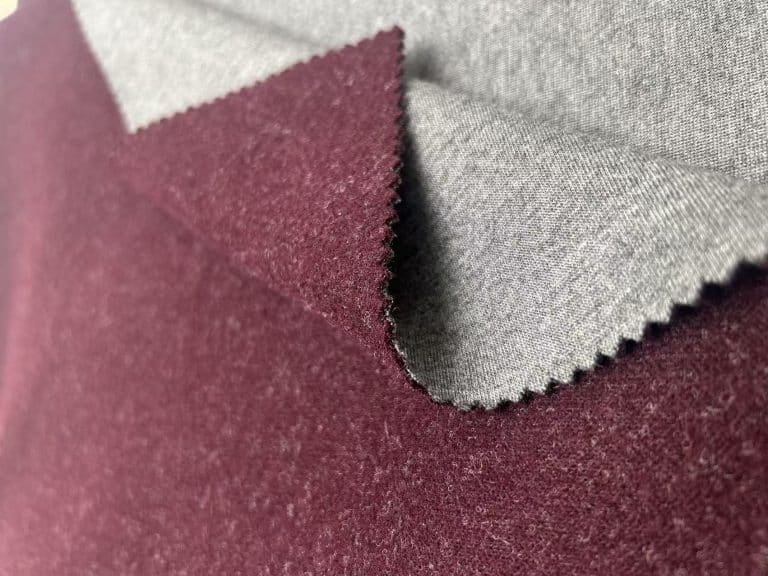
With consumers’ dual pursuit of clothing texture and cost-effectiveness, imitation cashmere polyester adhesive fabrics are gradually occupying the autumn and winter clothing and home fabric market with their soft touch close to natural cashmere and significant cost advantages. Especially with the combination of fleece or sweatcloth lining, the composite structure not only enhances warmth and comfort, but also solves the pain points of single material pilling and static electricity. Against the backdrop of fast fashion brands accelerating the substitution of raw materials and increasing demand for environmentally friendly recycled fibers, there is clear room for technological upgrades and market expansion in the yarn ratio, weaving process, and post finishing of such fabrics.
Market demand driving force for imitation cashmere polyester adhesive fabric
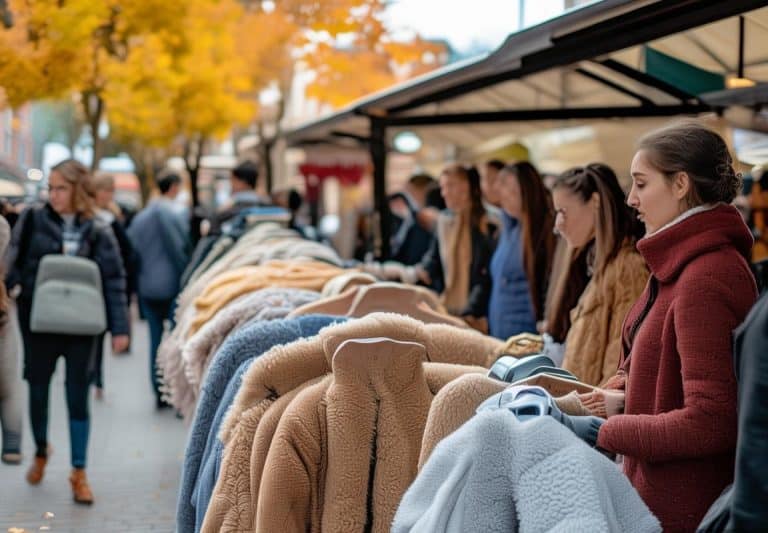
The market demand for imitation cashmere polyester adhesive fabrics is driven by consumers’ dual pursuit of high cost-effectiveness and visual texture. Traditional cashmere is expensive and requires complicated care, while polyester viscose blended imitation cashmere achieves controllable weight, no shrinkage during machine washing, and excellent color fastness, directly hitting the pain points of young families and fast-paced urban populations. Fast fashion brands use this to reduce fabric costs by 30% to 50%, while maintaining the “light luxury” appearance of autumn and winter jackets, scarves, and home wear, effectively increasing gross profit margins. The explosion of e-commerce channels has provided precise touchpoints for imitation cashmere: the conversion rate of the “100 yuan cashmere touch” tag in live streaming sales is extremely high, and the sharing of outfits on social media platforms is driving the growth of demand for niche color schemes. In addition, the expansion of the global middle class has led to the rapid penetration of affordable substitution strategies in emerging markets, with Southeast Asia and Latin America experiencing an annual increase of over 20% in purchase orders for imitation cashmere blankets and warm hoodies. Seasonal fluctuations have been strengthened – three months before the peak demand for autumn and winter in the Northern Hemisphere, fabric manufacturers need to stock up on greige fabric according to popular color cards. Overall, imitation cashmere polyester adhesive fabrics are continuously eroding the market share of pure cashmere and acrylic blend products through cost advantages and fashion compatibility.
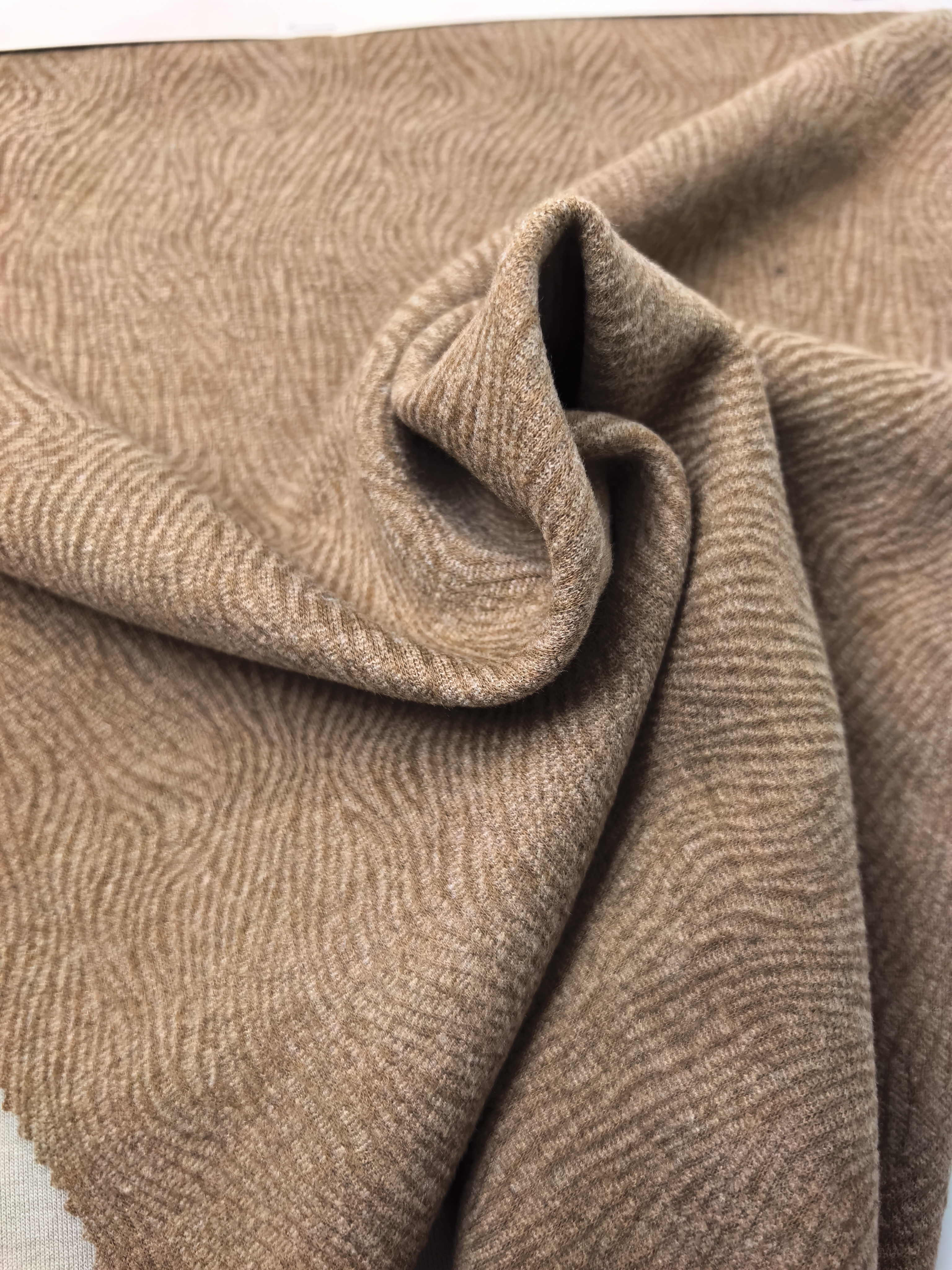
Key Process Innovation: Technological Upgrade of Suede and Lining
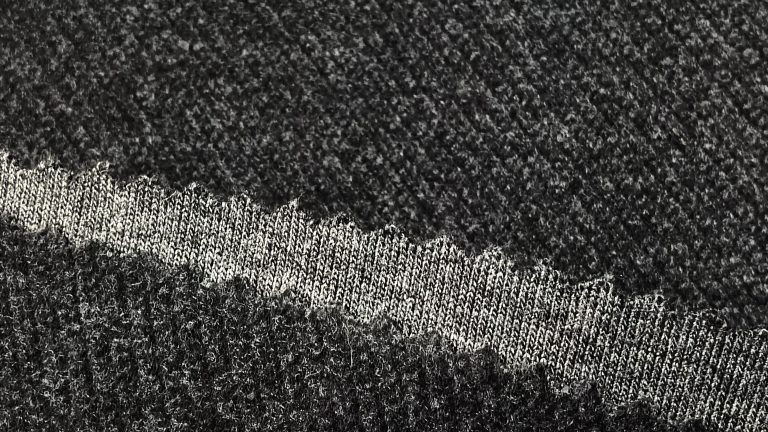
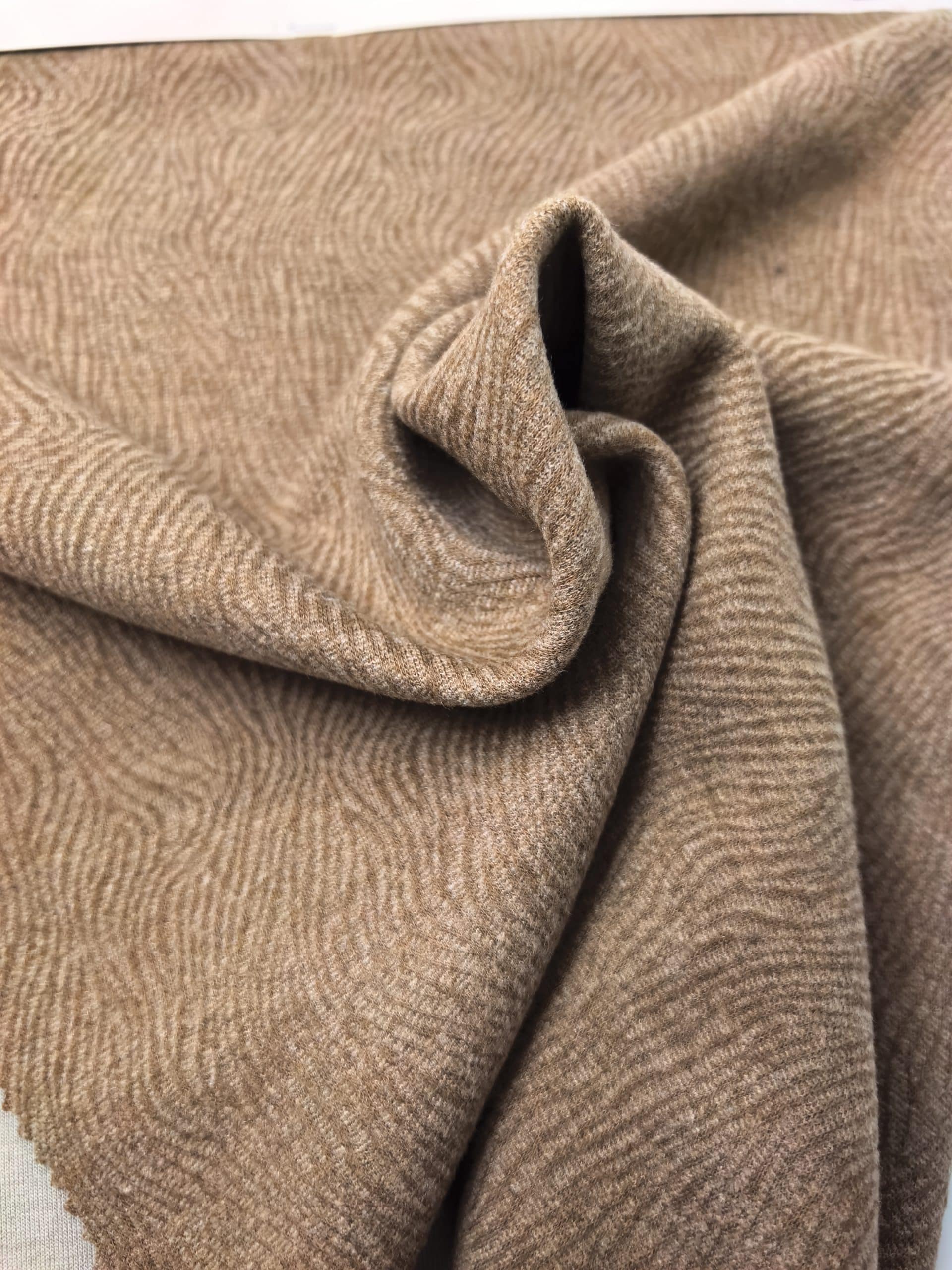
The combination of imitation cashmere surface and fleece or sweatcloth lining relies on precise control of double-sided weft knitting or warp knitting technology. Usually, a 32 needle or 24 needle machine is used, with different yarn configurations: the surface layer is made of fine denier polyester or viscose filament (such as 75D/72F) to create a fluffy and smooth velvet feeling, while the bottom layer is made of polyester low elastic yarn or pure cotton yarn woven into a fleece or sweatcloth structure. The key process lies in the fuzzing and shearing stages of the post finishing process – by using multiple fuzzing rollers to selectively grasp the surface, the short fibers float out to form a uniform pile surface of 0.5-1.2mm. Then, the shearing machine is used to precisely control the height to avoid excessive thickness of the pile surface, which may cause stiff hand feel or excessive shedding. For the inner lining with sweat cloth or small fleece rings, different temperature setting treatments are required: the inner lining part maintains a compact structure to prevent stretching deformation, while the outer velvet surface is fixed and curled through a loose heat setting effect at 160-180 ℃.
Anti static and anti pilling treatments are the core supplements to enhance durability. Add cationic antistatic agents during the dyeing and finishing stage to reduce the surface resistance of the fabric to below 10 ΩΩ; At the same time, biological enzyme polishing or low-temperature plasma treatment is used to control the fiber end fuzz within 0.5mm, and the pilling level after 5 washes according to AATCC 135 standard test is not less than 3-4 levels. The above technology combination makes the imitation cashmere polyester adhesive fabric approach 90% of natural cashmere in terms of tactile rebound, anti snagging, and machine washing stability, while the cost is only 25-30% of the latter.
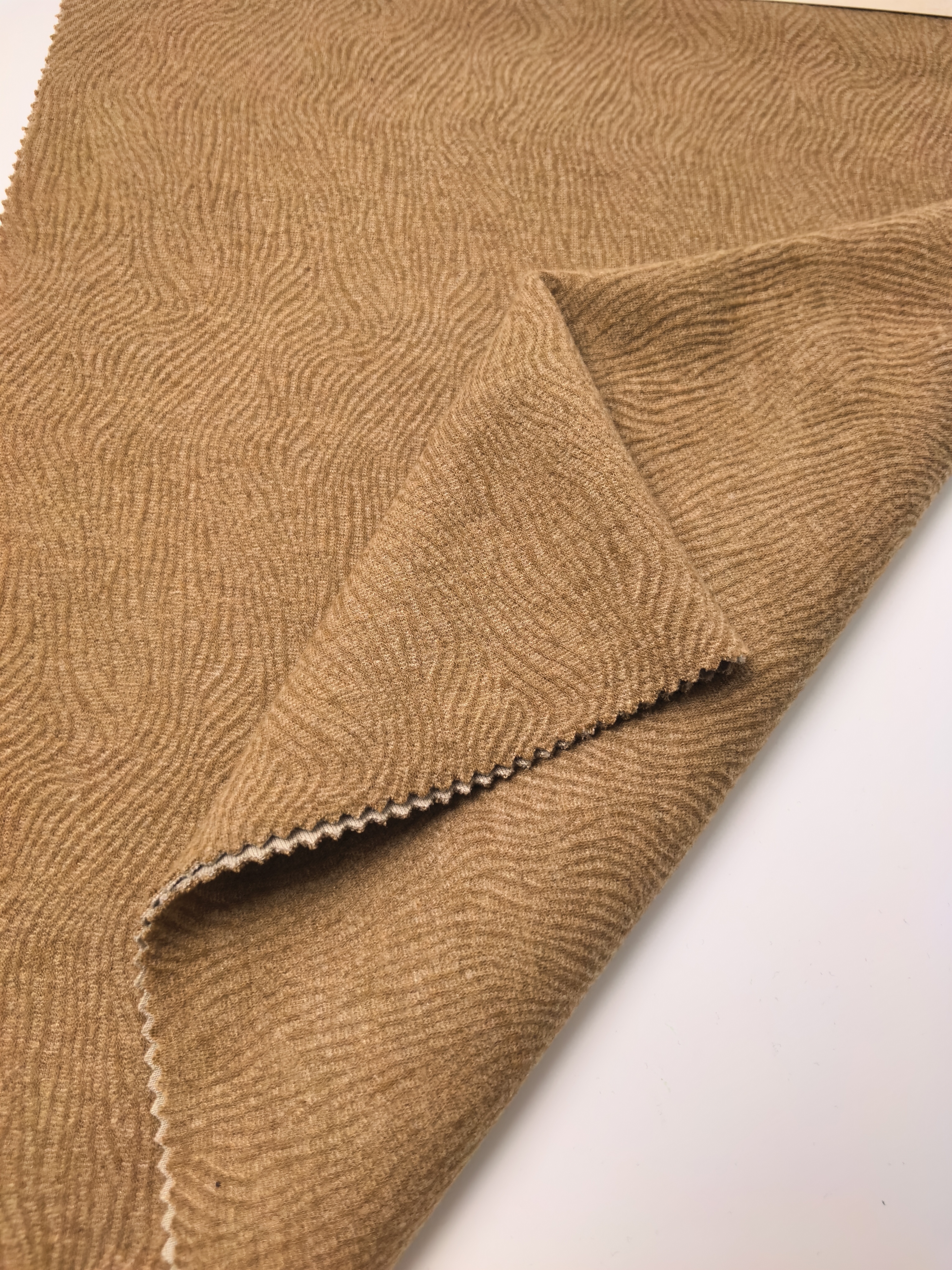
Opportunities for material substitution under sustainable trends
Raw polyester and bio based viscose fibers are gradually becoming the core substitutes for cashmere like fabrics. Recycled polyester is processed by recycling PET bottles or textile waste, which can reduce carbon emissions and water consumption by about 50%, while maintaining comparable spinnability and color fastness to virgin polyester. Biobased adhesive fibers come from FSC certified sustainable forest pulp, and their production process uses closed-loop solvent recovery technology, reducing wastewater emissions by more than 90% compared to traditional adhesives. In imitation cashmere fabrics, the mixing ratio of these two types of materials is usually controlled between 50%~70% recycled polyester and 30%~50% bio based adhesive, which can achieve a fluffy feel similar to cashmere and meet the strict requirements of the EU REACH regulation for restricted substances.
Compared to natural wool, the carbon footprint of recycled polyester viscose imitation cashmere is reduced by about 60%, and there is no need to worry about animal welfare disputes. Brand buyers are particularly sensitive to this -22 of the top 30 fashion retailers worldwide have listed GRS (Global Recycle Standard) or OEKO-TEX certification as procurement entry barriers. Taking Zara’s parent company Inditex as an example, its 2025 sustainability goal requires more than 60% of its fibers to come from environmentally friendly sources, and recycled polyester and viscose fabrics can fill the material gap in the formal and casual outerwear categories. In practical applications, this type of fabric has achieved large-scale production in the fields of mid thickness jackets, home gowns, and scarves in spring and autumn. The unit price of the fabric is 35% -40% lower than that of traditional wool blends, and the convenience of washing and care (machine washable, no ironing) has further expanded the consumer base. It is worth noting that some suppliers have started to launch “carbon footprint labeling” services, directly printing the carbon emission data of each meter of fabric on the washing label, which has become a key difference in seizing orders from European and American environmental retailers.
Regional growth differences in target markets
The preference of the European and American markets for imitation cashmere polyester adhesive fabrics is focused on tactile simulation and environmental certification. Consumers have become accustomed to using fabrics made from recycled polyester or FSC certified adhesive, and hope that products come with OEKO-TEX or GRS labels to demonstrate sustainable properties. When purchasing, the brand will use the natural cashmere like sanding process and anti pilling grade as hard indicators, while requiring color fastness to meet international standards. In terms of price, European customers usually accept mid to high end quotes of $5 to $8 per meter, but the order quantity is small and the delivery deadline is strict. The US market pays more attention to seasonal popular colors, such as autumn and winter caramel color, ash blue, etc., as well as whether the fabric has elasticity to adapt to home or sports scenes.
The Asian market is vastly different, with cost being the core driving force. Chinese and Southeast Asian garment manufacturers tend to purchase imitation cashmere fabrics priced at $3 to $5 per meter, with a lower dependence on environmental certification and a greater focus on fabric stability, dyeing factory capacity, and fast delivery capabilities. Although the Japanese and Korean markets have high requirements for quality, their price range is still lower than that of Europe and America, and they prefer lightweight products made of ultra-fine fibers to meet the multi-purpose needs of interior and exterior wear. In recent years, India and Bangladesh have seen a significant increase in order growth, mainly driven by the demand for OEM manufacturing from European and American brands. Local buyers rely more on sample touch and offline inspection, and have limited trust in digital color cards or virtual sampling.
The differences in channels are also significant. The European and American markets have a higher frequency of purchasing through online B2B platforms and textile trade exhibitions, while Asia heavily relies on factory direct supply and intermediary systems. Brand owners need to differentiate their regional strategies: for Europe and America, they need to strengthen the preparation of tactile data and certification documents, while for Asia, they should focus on optimizing cost structures and shortening delivery cycles.
Supply Chain Optimization and Risk Control Strategies
Supply chain optimization needs to start from the raw material locking link. There is a significant difference in the price fluctuation cycle between viscose staple fiber and polyester filament. Based on the trend of futures prices, a quarterly framework agreement can be signed for imitation cashmere yarn to control the fluctuation range of raw fabric costs within ± 5%. The weaving process adopts a scheduling system that links machine utilization and order delivery time. For cashmere like fabrics, due to the time-consuming surface pilling process, a 3-day buffer period needs to be reserved between the knitting round machine and the carding machine to avoid production capacity loss caused by equipment switching.
Dyeing factory management is a high-risk area. The wool like texture of imitation cashmere depends on the precise ratio of soft finishing after dyeing and anti-static additives. It is necessary to establish a whitelist of additive suppliers and retain at least two backup plans. In response to the EU PFAS restriction regulations, switching C6 waterproofing agent to non fluorinated alternatives in advance can avoid order disruptions caused by environmental standard upgrades. At the same time, quality inspectors are stationed in the dyeing factory to monitor the color fastness and pilling level in real time, in order to prevent batch abnormalities from affecting the delivery of finished garments.
Modular cutting and intelligent hanging systems need to be forcibly implemented during the garment processing stage. Fleece or sweatcloth lining is prone to delamination and foaming during sewing. A humidity monitoring sensor should be installed before the hot pressing process to control the moisture regain below 8%. In terms of inventory buffer, it is recommended to set up bonded warehouses in the areas where end customers are located and keep standard fabrics of 3000 meters/color or more on hand, reducing the emergency replenishment cycle from 45 days to within 20 days.
Risk control focuses on geopolitical and logistics variables. If there is an abnormal blockage at the main raw material import port, it is necessary to lock in the backup production capacity of Southeast Asian textile factories in advance; During the period of tight sea freight space, we turned to using China Europe freight trains to ensure timely delivery of core customer orders. In addition, by purchasing quality insurance for imitation cashmere fabrics, we can hedge against surface feather losses caused by temperature and humidity fluctuations, ensuring that profits are not eroded by sudden quality accidents.